Construction Payment Fraud: Why the Industry Loses Billions

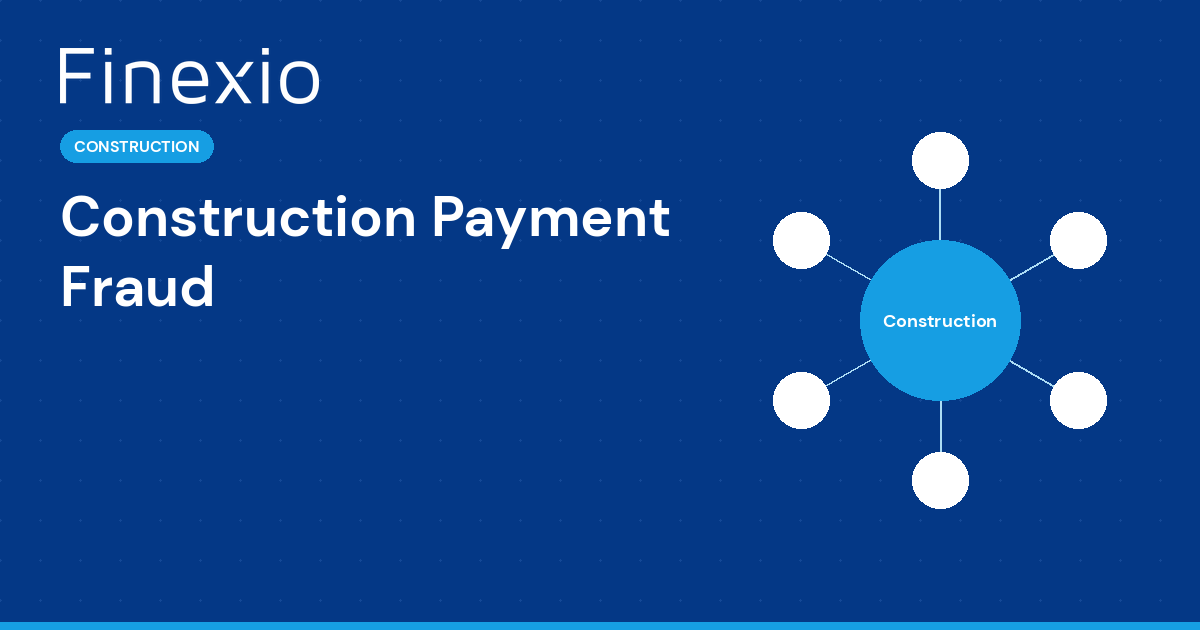
A general contractor pays a subcontractor. The subcontractor pays a material supplier. The supplier pays a manufacturer. Each payment depends on the one before it. And at every handoff, there is an opportunity for fraud.
Construction has one of the highest payment fraud rates of any industry. The combination of complex payment chains, check-heavy processes, and high-dollar transactions makes it a prime target. AFP and PYMNTS research shows that 80% of organizations have been targeted by payment fraud. In construction, the exposure is amplified by the way money moves through projects.
The losses run into billions annually across the industry. And most of them are preventable.
Why Construction Is a Fraud Magnet
The construction payment chain is unlike any other industry. A single commercial project can involve an owner, a general contractor, dozens of subcontractors, and hundreds of material suppliers. Money flows down through this chain in stages tied to progress billing, retention schedules, and milestone completions.
Each layer adds complexity. Each handoff adds risk.
Consider a typical commercial project. The owner approves a progress payment to the general contractor. The GC allocates portions to subcontractors based on completed work. Subcontractors pay their material suppliers and labor. Retention is held back at each level. Lien waivers must be collected before the next draw.
Now consider that most of these payments are still made by check. Physical checks mailed between parties, carrying visible account numbers, routing information, and authorized signatures. Every check is a target.
The Most Common Construction Payment Fraud Types
Vendor impersonation is the most costly fraud type. A fraudster poses as a legitimate subcontractor and submits updated banking information. The next payment goes to the fraudster's account. In construction, where vendor lists are long and payment relationships change project to project, these schemes succeed more often than most companies realize.
Check interception is the most straightforward attack. Checks are stolen from mailboxes, washed (chemicals remove the ink so the check can be rewritten), and deposited into fraudulent accounts.
Change order fraud exploits the nature of construction billing. Fraudulent change orders are submitted for work never performed or materials never delivered. In the rush of an active project, these slip through approval processes designed for speed rather than verification.
Business email compromise targets the people who authorize payments. A spoofed email from a project manager or subcontractor requests a payment redirect or urgent wire transfer. The urgency feels real. The money disappears.
Fake lien waiver schemes round out the list. Fraudsters submit fabricated lien waivers to release payments that should still be held.
Why Checks Make Everything Worse
The construction industry's reliance on check payments is not just inefficient. It is a security liability.
Every check that leaves your office contains the information a fraudster needs: your bank account number, routing number, and an authorized signature. Check fraud losses have increased significantly in recent years even as check volume has declined across other industries. Construction's stubborn attachment to checks makes it a disproportionate victim.
The average cost of processing a single B2B payment manually is $8.93. For a construction company cutting 500 checks a month, that is over $53,000 annually in processing costs alone, before accounting for fraud losses, stop-payment fees, or the staff time spent resolving payment disputes.
Electronic payments eliminate the physical vulnerability of checks entirely. Virtual cards generate unique card numbers for each transaction. ACH payments move directly between validated bank accounts. Neither method exposes your banking information the way a check does.
What Controls a Construction CFO Should Implement
Preventing construction payment fraud requires controls at multiple points in the payment process.
Bank account validation should happen before any payment is sent to a new vendor or when a vendor requests banking changes. This means verifying that the account belongs to the entity you intend to pay. Finexio performs this validation automatically as part of its payment operations workflow.
OFAC screening checks vendors against federal sanctions lists. This is both a compliance requirement and a fraud indicator. Finexio runs OFAC screening on every transaction.
Real-time payment monitoring catches anomalies before money moves. Unusual payment amounts, unexpected destinations, or patterns that deviate from historical norms trigger reviews before disbursement.
Dual authorization for payment changes adds a human verification step when vendor banking information is modified. This simple control blocks the majority of vendor impersonation schemes.
Electronic payment adoption reduces the attack surface. Moving from checks to virtual cards and ACH eliminates physical fraud vectors and creates digital audit trails that paper checks cannot match.
How Finexio Protects Construction Payments
Finexio's approach to construction payment fraud prevention starts with the recognition that construction companies cannot build this infrastructure internally. The payment chains are too complex, the vendor lists too long, and the fraud landscape too dynamic.
Finexio operates as the payment orchestration layer between your AP system and the banking infrastructure. Your team approves invoices. Finexio handles everything after that: routing optimization, supplier management, payment delivery, and exception handling.
Finexio Shield provides a $2M guarantee on qualifying transactions. This is not insurance you hope to never use. It is a commitment backed by the preventive controls, including bank account validation, OFAC screening, and real-time monitoring, that make fraud payouts rare.
The platform is built on J.P. Morgan Chase banking infrastructure with Mastercard and Visa partnerships. More than $75M has been invested in the platform. SOC 2 Type 2 certification and PCI DSS compliance are maintained continuously.
For construction companies, Finexio also handles supplier enablement. Converting subcontractors and suppliers from check payments to electronic methods typically reaches enrollment targets in under 90 days. Finexio manages the outreach, validation, and onboarding so your AP team stays focused on approvals rather than vendor management.
The Cost of Doing Nothing
Every month a construction company relies on manual check payments is another month of exposure. The methods are becoming more sophisticated. And the payment chains that define construction remain prime targets.
The question is not whether to address payment fraud. It is whether to build controls internally or partner with a platform that has 10+ years of experience and banking-grade infrastructure. Finexio exists for exactly this decision.
Frequently Asked Questions
What types of fraud does Finexio Shield cover for construction companies?
Finexio Shield provides a $2M guarantee on qualifying B2B payment transactions. It covers losses from vendor impersonation, payment diversion, and other fraud types that pass through the payment system. The guarantee is backed by preventive controls including bank account validation, OFAC screening, and real-time monitoring that catch most fraud attempts before payment is disbursed.
How does Finexio handle the complexity of construction payment chains?
Finexio operates as the payment orchestration layer after your AP system approves an invoice. Whether you are paying a subcontractor via virtual card, a material supplier via ACH, or a small vendor that still requires a check, Finexio routes each payment through the appropriate rail. The platform manages supplier enrollment, banking validation, and payment delivery across your entire vendor base.
Can construction companies reduce check usage without disrupting supplier relationships?
Yes. Finexio handles supplier enablement directly, contacting your vendors, validating their banking information, and enrolling them in electronic payment methods. The process typically reaches enrollment targets in under 90 days. Suppliers benefit from faster payment delivery. Your company benefits from reduced fraud exposure and lower processing costs.
Stop losing money to preventable fraud. Book a Consultation with Finexio to see how construction companies are protecting their payment operations.
Get the free Newsletter
Get the latest information on all things related to B2B and electronic payments delivered straight to your inbox.