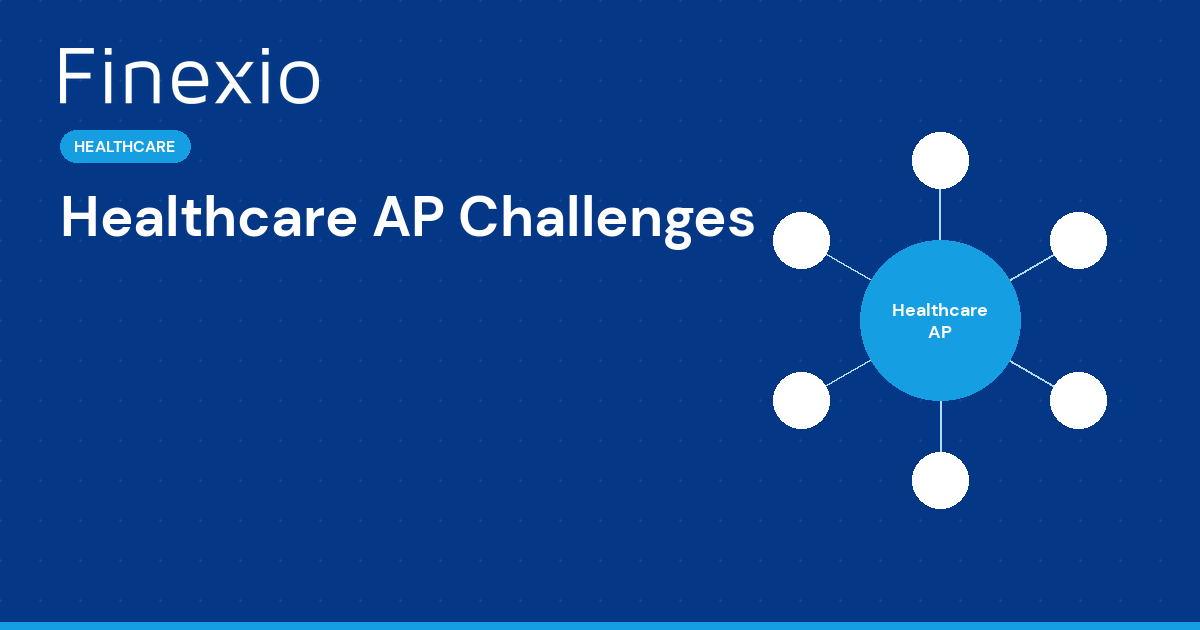
Healthcare AP Payment Challenges: Compliance, Fraud, and Solutions

Your hospital's accounts payable team is caught between two forces. On one side, rising fraud rates and tightening compliance requirements. On the other, suppliers demanding faster payment for the medical equipment, pharmaceuticals, and services that keep your organization running.
The result? Most healthcare systems still pay 60-70% of invoices by check. And every manual payment costs an average of $8.93 to process.
That gap between where healthcare AP teams are and where they need to be represents one of the biggest operational risks in the industry.
Why Healthcare AP Is Different
Healthcare organizations do not operate like other businesses when it comes to payments. HIPAA adds a compliance layer to payment data that most industries never think about. Patient information can intersect with billing data. Vendor records may contain protected health information. Even remittance details can trigger compliance obligations.
This means your AP team is not just processing payments. They are handling data that carries regulatory consequences if mismanaged.
Add to that the sheer volume. A mid-size hospital system processes thousands of invoices monthly across medical supplies, pharmaceutical distributors, equipment maintenance vendors, contracted clinical staff, and facility operations. Each invoice carries its own approval chain, payment terms, and compliance requirements.
The complexity is not theoretical. It shows up in delayed payments, strained supplier relationships, and AP teams buried in manual work.
The Fraud Problem in Healthcare Payments
Healthcare is one of the most targeted industries for payment fraud. The American Hospital Association has flagged B2B payment fraud as a growing risk, and the data backs it up. AFP research shows that 80% of organizations experienced payment fraud attempts in recent years. Healthcare organizations face an outsized share of those attacks.
Why? Three reasons.
First, check payments dominate. Checks are the most vulnerable payment method. They carry visible account numbers, routing information, and authorized signatures. Every check that leaves your facility is a potential fraud vector.
Second, vendor complexity creates openings. Healthcare organizations work with hundreds or thousands of suppliers. Each vendor relationship is a potential entry point for impersonation schemes, fake invoices, or redirected payment requests.
Third, urgency works against security. When a surgical equipment supplier or pharmaceutical distributor needs payment, the pressure to pay quickly can override verification steps. Fraudsters exploit this urgency.
The types of fraud that hit healthcare AP teams include vendor impersonation (fraudsters posing as legitimate suppliers to redirect payments), check interception (physical theft of mailed checks), and business email compromise (spoofed emails requesting payment changes). Each of these attacks targets the manual, check-heavy processes that most healthcare organizations still rely on.
What Compliance Actually Requires
SOC 2 Type 2 certification and PCI DSS compliance are not optional extras for healthcare payment processing. They are baseline requirements.
SOC 2 Type 2 audits verify that security controls are not just designed but operating effectively over time. PCI DSS compliance protects cardholder data throughout the payment lifecycle. Together, they create the foundation for handling payment data in a regulated environment.
Finexio maintains both SOC 2 Type 2 and PCI DSS certifications. This matters because when your AP platform or ERP hands off a payment file, you need to know the downstream processing meets the same compliance standards your organization is held to.
HIPAA compliance adds another layer. Payment data that intersects with patient information requires specific handling protocols, access controls, and audit trails. Any payment infrastructure touching healthcare data must account for this.
The Path from Checks to Electronic Payments
Moving a healthcare organization from majority-check payments to electronic payment methods is not a technology problem. It is a supplier enablement problem.
Here is the reality: your AP team cannot force suppliers to accept virtual cards or ACH payments. They have to be enrolled, onboarded, and supported. This is where most internal efforts stall. An AP team that already processes thousands of invoices monthly does not have the bandwidth to also run a supplier conversion program.
Finexio handles supplier enablement as part of its AP Payments as a Service model. Enrollment targets are typically met in under 90 days. The approach is straightforward: Finexio contacts your suppliers, validates their banking information, enrolls them in the appropriate payment rail (virtual card, ACH, or check for holdouts), and manages the ongoing relationship.
The payment mix shifts without your AP team carrying the burden.
How Finexio Protects Healthcare Payments
Finexio's approach to healthcare payment challenges addresses all three dimensions: compliance, fraud prevention, and operational efficiency.
On the compliance side, Finexio is built on J.P. Morgan Chase banking infrastructure with more than $75M in investment behind it. SOC 2 Type 2 and PCI DSS certifications are maintained continuously, not checked once and forgotten.
On fraud prevention, Finexio Shield provides a $2M guarantee on qualifying transactions. But the protection starts before a payment ever moves. Bank account validation, OFAC screening, and real-time monitoring catch fraudulent transactions before money leaves the system. Vendor impersonation, check interception, and business email compromise all target the manual processes that electronic payments eliminate.
On efficiency, the math is simple. If your organization processes 5,000 payments monthly at $8.93 per manual payment, that is over $535,000 annually in processing costs alone. Electronic payments through Finexio reduce that cost while improving payment speed and supplier satisfaction.
What Healthcare CFOs Should Do Next
If your organization still pays the majority of invoices by check, the risk profile is not improving on its own. Fraud attempts are increasing. Compliance requirements are tightening. Suppliers expect faster payment.
The starting point is an honest assessment of your current payment mix, processing costs, and fraud exposure. From there, the question is whether to build payment infrastructure internally or partner with a platform that already has the certifications, banking relationships, and supplier network in place.
Finexio works with healthcare organizations across the country to make this transition. With 10+ years in market and partnerships with Mastercard and Visa alongside J.P. Morgan Chase infrastructure, the platform is built for exactly this use case.
Frequently Asked Questions
How does Finexio handle HIPAA requirements for payment data?
Finexio maintains SOC 2 Type 2 and PCI DSS certifications that establish baseline security controls for payment data handling. Payment processing is separated from clinical data systems, and all data flows include encryption, access controls, and audit trails that align with healthcare compliance requirements.
What is Finexio Shield and how does it protect healthcare payments?
Finexio Shield is a $2M fraud guarantee that covers qualifying B2B transactions. It works alongside preventive controls including bank account validation, OFAC screening, and real-time payment monitoring. These controls catch fraudulent payment attempts before funds are disbursed, addressing the most common fraud types that target healthcare organizations.
How long does it take to move a healthcare organization from checks to electronic payments?
Finexio typically achieves supplier enrollment targets in under 90 days. The timeline depends on your supplier base size and current payment mix. Finexio handles the supplier outreach, banking validation, and onboarding directly, so your AP team does not need to manage the conversion process.
Ready to see what your healthcare organization's payment operations could look like? Book a Consultation with the Finexio team.
Get the free Newsletter
Get the latest information on all things related to B2B and electronic payments delivered straight to your inbox.