How to Calculate Your Virtual Card Rebate Revenue

Most finance leaders think of accounts payable as a cost center. Every invoice processed, every payment sent, every exception handled is an expense on the books. The goal is to minimize it.
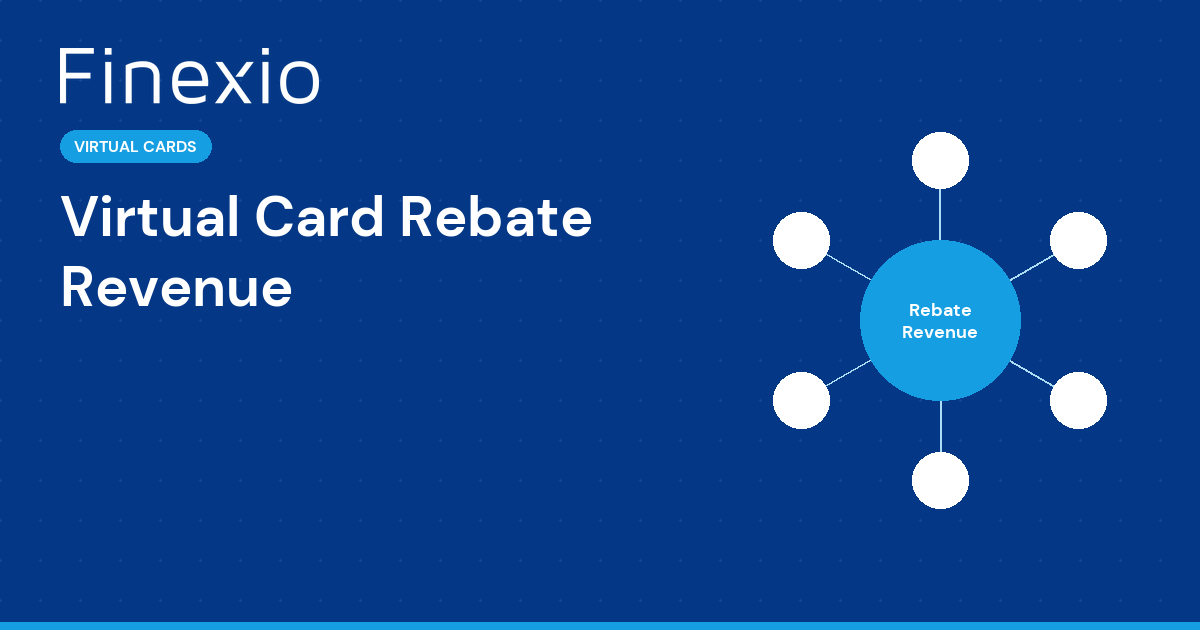
Virtual card payments change that equation. They do not just cost less than checks. They generate revenue. Every time a supplier accepts a virtual card payment, the interchange fee creates a rebate that flows back to your organization. It is real money, and it hits your bottom line.
This post walks through the math so you can calculate your own number. No guesswork. Just a formula you can run against your actual AP data.
How Virtual Card Rebates Work
When you pay a supplier with a virtual card, the transaction runs through the Mastercard or Visa network, just like a consumer card purchase. The card network charges an interchange fee, typically 1.5% to 2.5% of the transaction amount.
That interchange fee gets split among several parties. A portion goes to the network. A portion goes to the acquiring bank (the supplier's bank). And a portion, the rebate, goes back to the paying organization.
The net rebate rate your organization receives depends on your payment provider, your volume, and the card network agreements in place. Working with Finexio, which is built on J.P. Morgan Chase banking infrastructure with Mastercard and Visa partnerships, organizations typically see a net rebate of approximately 0.85% of virtual card payment volume.
The Rebate Revenue Formula
Here is the formula:
Annual Rebate Revenue = Total AP Spend x Virtual Card Eligible % x Supplier Adoption Rate x Net Rebate Rate
Four variables. Each one is something you can estimate from your own data.
Total AP Spend. Your annual accounts payable volume. This is the total dollar amount your organization pays to suppliers each year. Pull this from your ERP or AP system.
Virtual Card Eligible %. Not every payment can go on a virtual card. Some suppliers will not accept them. Some payment types (like payroll or tax payments) are not eligible. For most B2B organizations, 30% to 50% of AP spend is virtual card eligible. If you are unsure, start with 40% as a conservative estimate.
Supplier Adoption Rate. Of the suppliers who could accept virtual cards, how many actually do? This is where supplier enablement matters. Self-service programs typically achieve 15% to 25%. Programs with dedicated enablement, like Finexio's managed approach, consistently reach 50% or higher.
Net Rebate Rate. The percentage of each virtual card transaction that comes back to you. Through Finexio's AP Payments as a Service platform, the net rebate is approximately 0.85%.
Running the Numbers: A Real Example
Let us use a mid-market company with $100 million in annual AP spend.
| Variable | Value |
|---|---|
| Total AP Spend | $100,000,000 |
| Virtual Card Eligible % | 40% |
| Supplier Adoption Rate | 60% |
| Net Rebate Rate | 0.85% |
Calculation:
$100,000,000 x 0.40 x 0.60 x 0.0085 = $204,000 per year
That is $204,000 in new revenue. Not savings. Revenue. And it scales linearly. A company with $500 million in AP spend using the same assumptions would generate over $1 million annually.
Plug In Your Own Numbers
Here is a quick reference table so you can estimate your rebate potential at different spend levels and adoption rates.
| Annual AP Spend | 40% Eligible, 30% Adoption | 40% Eligible, 50% Adoption | 40% Eligible, 70% Adoption |
|---|---|---|---|
| $50M | $51,000 | $85,000 | $119,000 |
| $100M | $102,000 | $170,000 | $238,000 |
| $250M | $255,000 | $425,000 | $595,000 |
| $500M | $510,000 | $850,000 | $1,190,000 |
| $1B | $1,020,000 | $1,700,000 | $2,380,000 |
(All figures use 0.85% net rebate rate.)
Notice how the adoption rate column is the biggest lever. Moving from 30% to 70% adoption on the same eligible spend nearly triples your rebate. This is why supplier enablement is not a nice-to-have. It is the primary driver of program ROI.
Why Adoption Rate Is the Variable That Matters Most
You cannot change your total AP spend. Your virtual card eligible percentage is largely determined by your supplier mix and industry. The rebate rate is set by your provider and card network agreements.
The one variable you can directly influence is supplier adoption. At 20% adoption, a $100 million AP organization generates around $68,000 in rebates. At 60% adoption, that same organization generates $204,000. Same spend. Same rebate rate. Triple the revenue, driven entirely by how many suppliers you convert.
This is why Finexio invests so heavily in supplier management. Dedicated supplier enablement teams, data-driven targeting, the Visa Account Relationship Management methodology, and ongoing optimization are all aimed at one goal: pushing that adoption number higher.
From Cost Center to Revenue Generator
The traditional AP mindset treats every payment as an expense to be minimized. Virtual card rebates flip that thinking.
When your AP department generates $200,000 or $500,000 or $1 million in annual rebate revenue, it is no longer just a cost center. It is a revenue-generating function. That changes how the CFO thinks about AP investment, how the board evaluates operational efficiency, and how the finance team justifies its budget.
Finexio's model is designed to maximize this shift. Built on J.P. Morgan Chase infrastructure. Mastercard and Visa network partnerships. Over 10 years of experience in B2B payment optimization. $75M+ in investment behind the platform.
The economics are there. The infrastructure exists. The only question is how much of your AP spend you are converting to virtual card today, and how much more is possible.
Frequently Asked Questions
Do we receive the rebate directly, or does it offset fees?
With Finexio, rebate revenue is returned directly to your organization. It is not used to offset platform fees or processing costs. The rebate is a separate revenue stream that you receive on top of the cost savings from moving off checks.
What happens if a supplier does not want to accept virtual cards?
They continue to get paid through ACH or check via Finexio's platform. The payment mix is flexible. Finexio's enablement team works to convert suppliers over time, but no supplier is forced into a payment method they do not want. Your rebate revenue grows as adoption increases.
Is 0.85% the standard rebate rate, or does it vary?
The net rebate rate depends on your payment provider, volume, and network agreements. The 0.85% figure reflects what organizations typically achieve through Finexio's platform, which is built on J.P. Morgan Chase banking infrastructure with direct Mastercard and Visa partnerships. Higher volumes can support favorable terms.
Want to know your exact rebate opportunity? Finexio can model your specific AP data and show you the revenue potential. Book a Consultation to run the numbers.
Get the free Newsletter
Get the latest information on all things related to B2B and electronic payments delivered straight to your inbox.